



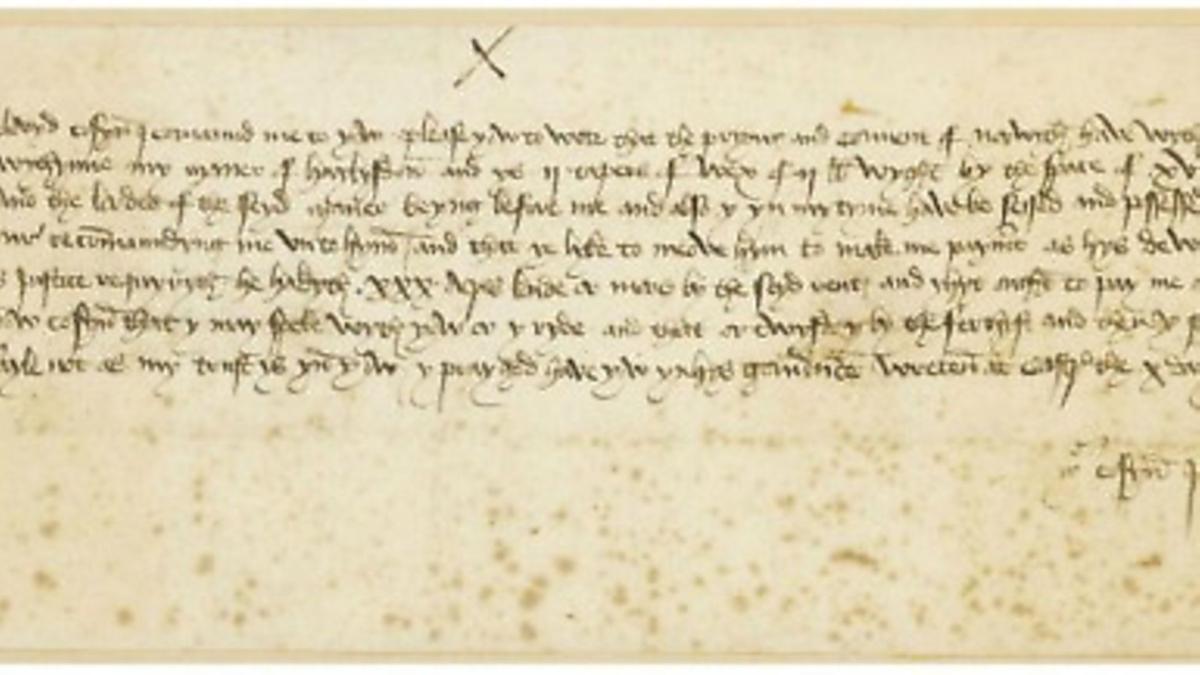
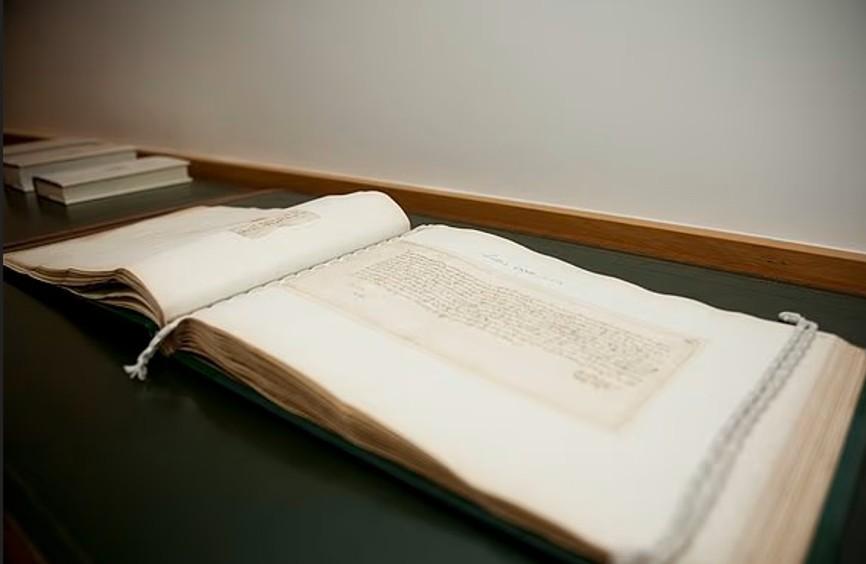

The world's oldest love letter written in English tells of a Norfolk woman's dilemma between her heart and money more than 500 years ago.
When Margery Brews wrote to her fiancé John Paston in February 1477, she broke the news her father would not increase the dowry she would bring with her to wedlock.
But she assured him that she would love him all the same even if the start of their married life was not as comfortable as they might have hoped.
Now a fresh translation generated by a new artificial intelligence (AI) tool has shone new light on the lovers' plight five centuries later.
Researchers from the online family history platform MyHeritage fed the missive into a new AI tool it has developed called Scribe.
It was written in long-defunct late Middle English that had extra characters which are no longer used.
They found it could quickly get to grips with the language Miss Brews uses to lay her emotions bare with personal flourishes and inconsistent spellings.


MyHeritage said the language can feel unfamiliar to modern readers because spelling, grammar and pronunciation were very different from the English we use now.
Miss Brews tells her fiancé that she has a "full heavy heart" as her mother has failed to persuade her father to increase her dowry.
Beseeching him to keep the matter private, she reassures John her "heart loves him above all earthly things", promising she would not abandon him even if he ends up with a smaller estate or less money than he had hoped.
The couple were married soon after she sent the letter and went on to have a son, William, in 1479.
According to AI, the letter was written in Topcroft, near Bungay in February 1477, which was later annotated as Feb. 1476/7.

It is part of the Paston collection of hundreds of family papers spanning the 15th and 16th centuries.
The collection charts the rise of the family from the village of the same name near North Walsham from medieval peasants to become wealthy landowners, merchants and lawyers based around Caister and Great Yarmouth.
Some were published for the first time in the late 18th century, including Margery Brews' letter.
They were later edited by scholar James Gairdner, between 1872 and 1904 - who could never have imagined the modern-day technology which would accomplish the same task in minutes.
THE LETTER'S TEXT
Right reverend and honourable, and my very well‑beloved Valentine, I commend myself to you most heartily, longing to hear how you are, and I pray Almighty God to preserve you for a long time, according to His pleasure and your heart’s desire.
And if you wish to know how I am, I am not in good health of body or of heart, nor shall I be until I hear from you, for no creature knows what pain I endure, and indeed I dare not reveal it.
My lady my mother has pressed the matter with my father very diligently, but she can get no more from him than you already know of, and God knows I am very sorry for that. But if you love me, as I truly trust that you do, you will not leave me for that reason, even if you had not half the income that you have, for, however great the effort any woman alive might make, I would not give you up.
And if you command me to keep true to you wherever I go, I promise I will do all in my power to love you, and never anyone else. And if my friends say that I do wrong, they shall not stop me, for my heart bids me evermore to love you truly above all earthly things. And if they are ever so angry, I trust it shall be better in time to come.
No more to you at this time, except that the Holy Trinity keep you. And I beseech you that this letter be not seen by any earthly creature except yourself. And this letter was written at Topcroft with a very heavy heart.
By your own
M. B.


Share